Latest News

When people think about electronics manufacturing, they often picture engineers in labs or the sophisticated equipment used to produce the technologies that power modern life. Those workers and technologies are essential. But a successful electronics manufacturing sector depends on much more. It requires skilled technicians, assemblers, welders, electricians, logistics professionals, quality-control specialists, and many others [...]

A recent episode of WCNY’s On the Money highlighted how Broome County is preparing its workforce, infrastructure and communities for new opportunities tied to the growth of New York’s semiconductor industry. Micron’s historic investment in Central New York will create opportunities that extend far beyond its Syracuse-area campus. As semiconductor suppliers look for locations near [...]

Broome County has spent the past decade building momentum and positioning itself for new investment. Now, as major investments reshape Upstate New York, regional leaders are focused on ensuring the county is ready to seize the opportunities ahead. The Agency Executive Director Stacey Duncan joined Broome County Executive Jason Garnar, Binghamton University President Anne D’Alleva [...]

New York State is experiencing unprecedented investment in semiconductor manufacturing and other advanced technology industries, creating new economic opportunities for communities that are prepared to support these growing supply chains. As projects like Micron move forward in Central New York, communities across the state are considering how they can support — and benefit from — [...]

When people hear the words "economic development," they often focus on the jobs, investment, and new opportunities it can bring. But an equally important question is often overlooked: where should that development occur? The answer matters because growth affects far more than the businesses that choose to locate in a community. It shapes roads, [...]

Late last year, we alerted the community to a legal challenge brought by the Town of Maine that sought to halt portions of the State Environmental Quality Review (SEQR) process for the proposed Broome Technology Park. We are pleased to share today that the court has rejected that lawsuit and recognized the importance of allowing [...]
When people think about electronics manufacturing, they often picture engineers in labs or the sophisticated equipment used to produce the technologies that power modern life. Those workers and technologies are essential. But a successful electronics manufacturing sector depends on much more. It requires skilled technicians, assemblers, welders, electricians, logistics professionals, quality-control specialists, and many others [...]
A recent episode of WCNY’s On the Money highlighted how Broome County is preparing its workforce, infrastructure and communities for new opportunities tied to the growth of New York’s semiconductor industry. Micron’s historic investment in Central New York will create opportunities that extend far beyond its Syracuse-area campus. As semiconductor suppliers look for locations near [...]
Broome County has spent the past decade building momentum and positioning itself for new investment. Now, as major investments reshape Upstate New York, regional leaders are focused on ensuring the county is ready to seize the opportunities ahead. The Agency Executive Director Stacey Duncan joined Broome County Executive Jason Garnar, Binghamton University President Anne D’Alleva [...]
New York State is experiencing unprecedented investment in semiconductor manufacturing and other advanced technology industries, creating new economic opportunities for communities that are prepared to support these growing supply chains. As projects like Micron move forward in Central New York, communities across the state are considering how they can support — and benefit from — [...]
When people hear the words "economic development," they often focus on the jobs, investment, and new opportunities it can bring. But an equally important question is often overlooked: where should that development occur? The answer matters because growth affects far more than the businesses that choose to locate in a community. It shapes roads, [...]
Late last year, we alerted the community to a legal challenge brought by the Town of Maine that sought to halt portions of the State Environmental Quality Review (SEQR) process for the proposed Broome Technology Park. We are pleased to share today that the court has rejected that lawsuit and recognized the importance of allowing [...]
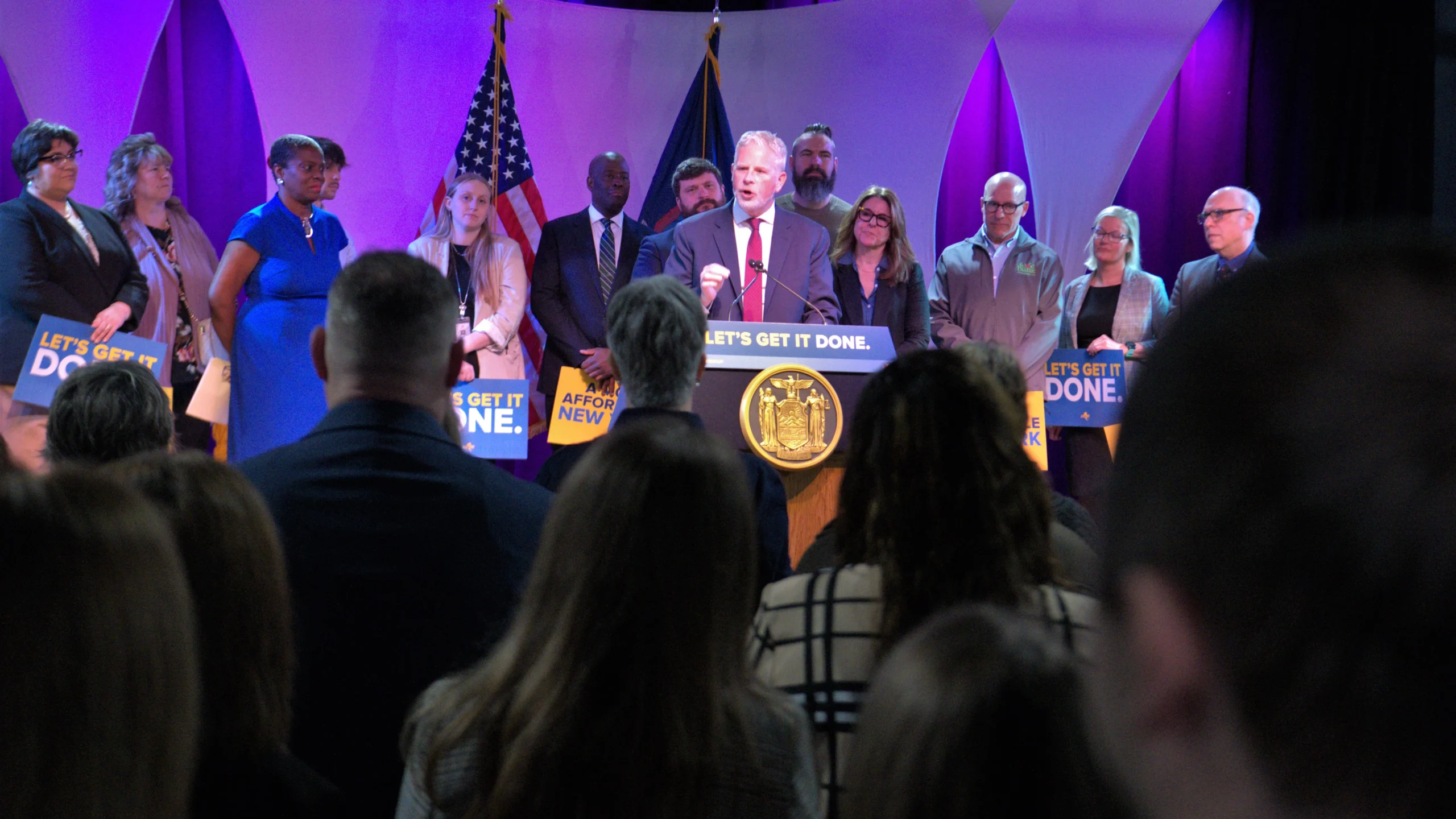
Not too long ago, the story around Broome County wasn’t a great one. We were losing jobs, losing people and watching opportunities pass us by. That’s not the story anymore. Now the question is simple: are we going to keep this going or let it slip? Because things are finally moving. You can see it [...]
The Broome County Industrial Development Agency (IDA) today announced that it will hold a public hearing on the Draft Generic Environmental Impact Statement (DGEIS) for the proposed Broome Technology Park on Wednesday, April 23, at 6 p.m. at Johnson City High School as part of an ongoing public review process for the development concept. [...]
FOR IMMEDIATE RELEASE March 18, 2026 Broome County IDA Releases Broome Technology Park Draft Generic Environmental Impact Statement for Public Review *Note that due to scheduling constraints, the Public Hearing has been rescheduled for April 23. Considering this, the end of the Public Comment period will be extended to May 8 BINGHAMTON, NY — The [...]

The message from the Greater Binghamton Association of Realtors at our Chamber of Commerce Economic Forecast event last week was simple: We need more housing — now. The Greater Binghamton housing market is increasingly tightening. According to GBAR’s data, there was on average 1,600 homes for sale at any given point ten years ago. Today, [...]
Bringing this Vision to Life
Bringing this Vision to Life
Technology-driven business parks meet communities’ economic needs, drive high-quality job creation, and generate significant tax revenue. Locating technology parks in areas with untapped potential and exciting educational resources enables local governments and nonprofits to promote economic activity and enhance quality of life. Successful tech park development requires enhanced infrastructure, trusted on-the-ground partnerships, and predictability. Once a site is ready, the attraction of amazing projects serves as the catalyst for luring investments, improved transportation systems, reliable utilities, broadband access, viable housing, and overall support for local communities.
Technology-driven business parks meet communities’ economic needs, drive high-quality job creation, and generate significant tax revenue. Locating technology parks in areas with untapped potential and exciting educational resources enables local governments and nonprofits to promote economic activity and enhance quality of life.
Successful tech park development requires enhanced infrastructure, trusted on-the-ground partnerships, and predictability. Once a site is ready, the attraction of amazing projects serves as the catalyst for luring investments, improved transportation systems, reliable utilities, broadband access, viable housing, and overall support for local communities.
Questions or Comments?
Questions or Comments?
If you have questions about the Broome Technology Park, we are here to engage in civil, respectful, substantive dialogue. Email us at [email protected].
If you have questions about the Broome Technology Park, we are here to engage in civil, respectful, substantive dialogue. Email us at [email protected].
Get your questions answered
Our primary FAQs are answered below. If you have further questions, please contact us at
[email protected].
FAQs:
Technology parks bring together businesses, infrastructure, and workforce pipelines in one place to attract employers, create jobs, and grow the local tax base.
In Broome County, the last multi-acre development of this kind—the Broome Corporate Park in Conklin—was completed in 1984 and is now nearly fully occupied. To remain competitive and capture new opportunities, the region must prepare sites that can support the next generation of employers and connect local workers to long-term careers.
Today, many companies will only consider “shovel-ready” sites — new locations that have been evaluated in advance and can support new development without delays. Even still, effective economic development is not one-size-fits-all. Preparing new sites complements the rehabilitation of legacy infrastructure, a best-of-both-worlds strategy that ensures we are ready for the diverse demands of advanced companies that are well-positioned to grow — and grow jobs — over time.
Tech parks have become commonplace in communities around the world. They offer many benefits, including enhancing economic development, tax-based growth, adding jobs, improving overall livability, and providing a sustainable future for a community.
Locations vary, but they often are located near major roadways and/or airports. This is attractive to businesses who need easily accessible transportation for their employees, their supply chain partners, and the movement of products.
They vary, but often they are mid-size to large companies looking to establish a headquarters or a satellite operation in a given community.
To communities, tech parks are a way to build the tax base, bring in family-sustaining jobs, and increase economic viability. For tenant companies, tech parks offer accessibility to shared services; utilities; internet, phone, and satellite communications; transportation; and other infrastructure that is critical to running a business in the 21st century.
The Broome Technology Park is a long-term initiative to help Broome County compete for modern, high-growth industries.
Today, many companies require shovel-ready sites with access to infrastructure, utilities, and a skilled workforce. The county’s last multi-acre development of this kind — the Broome Corporate Park in Conklin — opened in 1984 and is now nearly fully occupied.
To remain competitive, the region must prepare new sites that can support large-scale operations, attract good-paying jobs, and drive long-term economic growth.
A new tech park will make our community more economically competitive. Broome County’s available developable acreage is very limited given its steep topography and floodplains. While we are seeing success in restoring previously vacant sites like the Huron Campus in Endicott, without the development of new, shovel-ready sites, Broome County is in danger of losing out on future opportunities with businesses better suited for
new development sites. Companies like Micron and GlobalFoundries have been wooed to other areas of the state by more competitive locations. The Broome Technology Park will give us the competitive edge we need to thrive well into the future.
The Broome County IDA has extensively studied the potential development of a 537-acre site spanning the towns of Union and Maine. The site consists of vacant land with rolling terrain, including wooded areas and open fields. Its proximity to the Greater Binghamton Airport and access to major highways make it well-positioned to support industries that rely on efficient transportation and logistics.
Planning efforts are focused on ensuring that any future development is thoughtfully designed to fit the surrounding community and align with local priorities.
The Broome County IDA has conducted an extensive, multi-phase analysis to evaluate the site and its suitability for long-term development. This work has included detailed assessments of environmental conditions, wetlands, water resources, topography, infrastructure capacity, transportation systems, and existing zoning. These studies are designed to ensure that any future development is guided by a thorough understanding of the site and can be planned in a way that minimizes impacts while supporting sustainable, well-coordinated growth.
Broome County is one of the poorest counties in New York. It has consistently lost population in recent years due in part to the lack of family-sustaining job opportunities for new and established residents. It’s critical that we grow to secure the long-term viability of our community for generations to come. We anticipate the development of this land could support about 7,000 jobs, $690 million in earnings and $2.3 billion in economic activity at full buildout after 20 years.
The Broome Technology Park is currently in the environmental review phase under the State Environmental Quality Review Act (SEQRA).
The Draft Generic Environmental Impact Statement (DGEIS) has been released for public comment. No construction has been approved, and no specific development projects or tenants have been identified.
This stage is focused on analysis and public input before any future decisions are made.
No. Redevelopment of existing properties and preparation of new sites are both essential to a comprehensive economic development strategy. Broome County is actively investing in legacy sites, and projects like the redevelopment of the Huron Campus in Endicott demonstrate that existing infrastructure can successfully support new business growth when it aligns with a company’s needs.
At the same time, not all industries can be accommodated within existing sites. Some require larger footprints, different infrastructure, or site configurations that only new development can provide. Preparing sites like the Broome Technology Park ensures the region can meet a wider range of opportunities and remain competitive for future investment.
While no specific companies have been identified, the site is being evaluated to support industries such as advanced manufacturing, semiconductor, testing and packaging, and life sciences.
Community input is an important part of this process, and there are multiple ways for residents to stay informed and share feedback.
The Draft Generic Environmental Impact Statement (DGEIS) and related materials are available for public review in the Resources section of this website, along with additional information to help explain the analysis.
Details on public forums and other opportunities to engage will be shared as they become available. Residents are encouraged to review the materials and participate in the process as it moves forward.